Every brand now has the same tools. The same models, the same image generators, the same writing assistants. When everyone has the same tools, the tools stop being an advantage.
What still sets a brand apart is what it knows and what it decides. Knowing what the market already says, what your customers actually care about, and what your own audience does on your site. Then deciding, as a human, what your brand will stand for that no one else does.
The good news: AI is very good at the first part. It can read far more of the market, far faster, than a team could by hand. Used this way, AI does not make your brand generic. It shows you exactly where generic lives, so you can stay out of it.
Here is how to do it in five steps.
1. Map the category with brand signals
Start outside your own walls. AI research agents can gather and summarize public information across the web, at a scale no research team could match by hand. Point them at the signals that show how your category presents itself:
- Competitor websites: headlines, value propositions, calls to action and the words they repeat most
- Visual patterns: colors, photography styles, layouts and the imagery everyone seems to use
- Reviews and ratings: what customers praise and complain about, in their own words
- Social conversations and community forums: the questions people ask and the language they use
- Search behavior: the questions people type when they look for what you sell
- Industry news, reports and job postings: where competitors are investing next
The output is a category map. It shows the crowded middle, the claims and visuals every competitor uses. Call it the vanilla zone. It also shows the gaps: needs that people talk about and no one answers well.
2. Listen to your target personas
A category map tells you what brands say. Personas tell you what people need. For each target persona, use AI to pull and sort what that kind of buyer says in public: in reviews, forums, comments and the questions they search for.
Turn it into a simple signal card for each persona:
- What they are trying to get done
- What frustrates them about the current options
- The exact words they use to describe the problem
- What makes them trust a brand, and what makes them leave
The exact words matter most. When your messaging uses your customers' language instead of your industry's jargon, it stands out, because almost no one else does it.
3. Check it against your own web analytics
Now bring it home. Your web analytics show what your real audience does, not what they say. Look at:
- Which pages and messages hold attention, and which ones people leave quickly
- The search terms and referral sources that bring people in
- Where visitors drop off before they contact you or buy
- Which content gets shared, saved or returned to
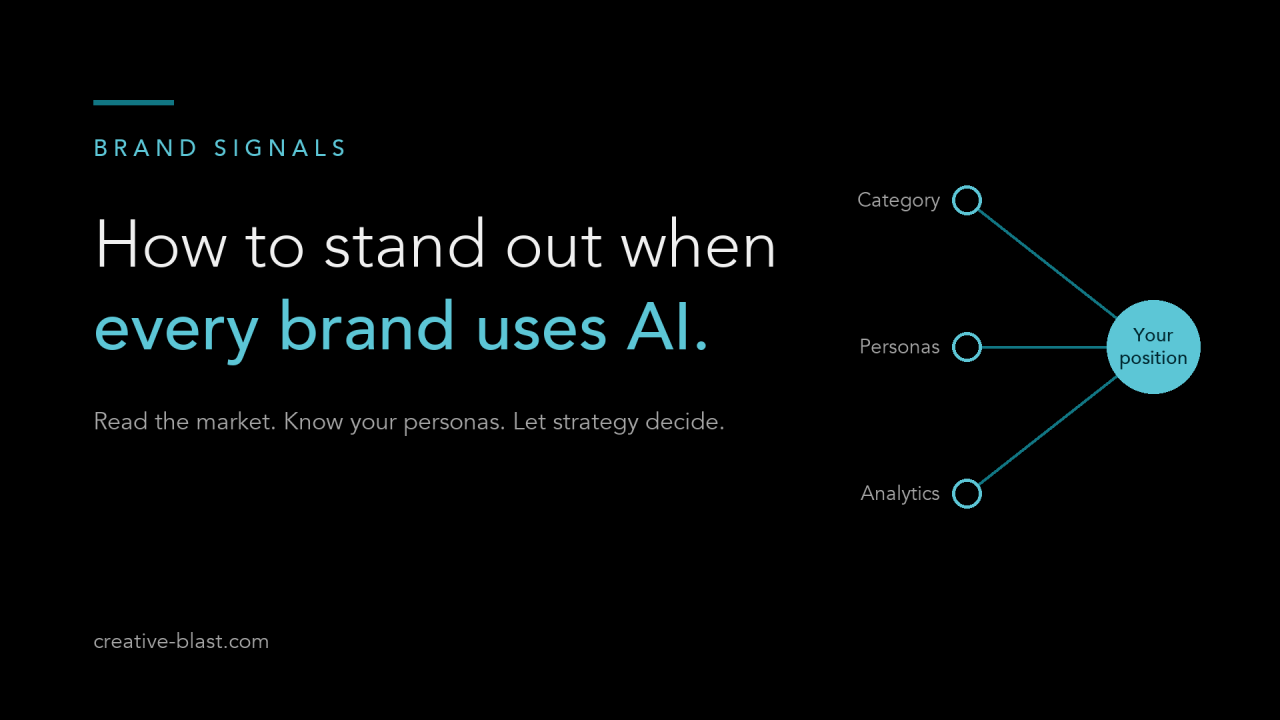
Then compare the three sources. Where does what the market says, what your personas need and what your audience does on your site line up? Where do they disagree? A message your personas care about that your site buries is an easy win. A page that gets traffic but loses people fast is a message that is not landing.
4. Let human strategy decide what to own
This is the step AI cannot do for you. The signals show options. Strategy picks one.
Look for the overlap of three things:
- What your target personas care about most
- What competitors are not saying, or not saying well
- What your brand can credibly deliver and prove
That overlap is your position. It is the one thing your brand should say more clearly and more often than anyone else. It takes judgment, taste and an honest view of what the brand can back up. No model has that. People do.
Once it is decided, write it down where every tool can read it: positioning, voice, the words to use and the words to avoid, visual direction, and AI guidelines. In an AI creative engine, this becomes the brand brain. From there, AI design systems turn it into templates and assets, and every output is reviewed by a human before it ships.
5. Keep listening
Markets move. Competitors copy what works. The vanilla zone grows every time a fresh idea gets repeated.
So the listening never stops. Refresh the category map and persona signals every quarter. Watch your analytics every month. When the signals shift, revisit the strategy. A brand that keeps listening stays ahead of the copycats.
A few guardrails
Using AI to research the web comes with responsibilities.
- Use public information only, and respect each site's terms of use and robots rules
- Do not collect personal data about individuals. You are looking for patterns, not people
- Check what AI tells you. Summaries can be wrong, so go back to the source before you act on a finding
- Keep people in charge of the conclusions. Signals inform the strategy. They do not replace it
Where to start this week
Pick three competitors and one persona. Use AI to summarize how each competitor describes itself and what that persona says about the problem you solve. Then open your analytics and find the page that gets the most traffic and loses the most people.
You will likely find one message the whole category repeats, one need nobody answers well, and one page on your own site that is not saying what your customers want to hear. That is a strategy conversation worth having.
Creative Blast builds AI creative engines that start with exactly this kind of research: brand context and real data from analytics, competitor audits and trend signals, steered by human strategy and finished by human craft. On-brand assets come out 90% faster, and the brand stays unique.
This quarter, the studio is offering a free 30-minute Brand AI Engine audit. You get a clear view of where AI can scale your creative work, where it could make your brand generic, and the first steps toward a brand brain built for your brand.
